
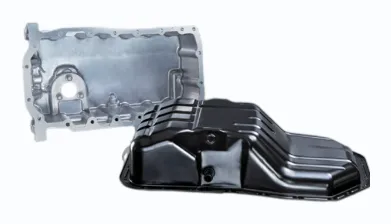
The oil pan, or sump, closes the bottom of the crankcase and holds the engine’s oil reserve. The oil pump draws from it through a pick-up pipe with a strainer, and baffles inside the pan keep the oil around the pick-up when the car corners, brakes or climbs. The pan carries the drain plug, and on many engines the oil level sensor and the mounting for a splash guard. Pressed steel pans are on most older and smaller engines; many modern engines use a cast aluminium pan, sometimes in two sections, that also stiffens the bottom of the block.
Pans are damaged from outside and wear from inside. A kerb, a speed bump or debris on the road dents a steel pan, so the pick-up sits too close to the floor, or cracks an aluminium one; salt corrodes a steel pan until it weeps; and a drain plug that has been over-tightened at every service strips the thread, so the plug will no longer seal. The gasket or the sealant joint between pan and block hardens and leaks with age.
MONTTRON oil pans are made to OEM-compliant quality and as aftermarket spare parts: the flange, the bolt pattern, the depth and the drain plug thread of the original, so the pan fits the original pick-up, baffle and sensor positions. The materials are tested for durability and temperature resistance.
The range covers European and Japanese passenger cars. Each reference is identified by the OE number of the original part; send that number and the vehicle identification number (VIN) and we confirm the matching MONTTRON reference.
For availability and OE cross-references, contact us by email.