
The short answer
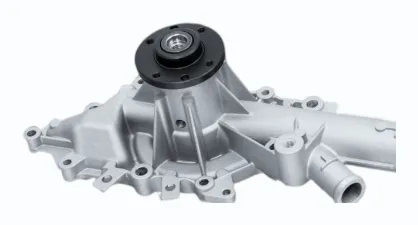
The water pump moves the coolant through the engine and the radiator. It fails at its shaft seal, which starts to weep, at its bearing, which whines and then grinds, and at its impeller, which corrodes, breaks or comes loose on the shaft. The signs are a crust of dried coolant under the pump, a rumble from the front of the engine, play in the pulley, coolant on the floor and an engine that runs hotter than it used to. The pump is replaced as soon as it weeps or makes a noise, and on engines where the timing belt drives it, it is replaced with the belt whether it has failed or not.
What the pump does
HELLA describes the job in a phrase: the pump has to “transport the coolant through the engine’s coolant circuit”, and “through the rotary motion of the impeller, coolant is transported within the cooling system.” Haynes puts the same thing in the language of the workshop: “the water pump uses impeller blades and centrifugal force to move the cooled water into the car’s engine”, where the coolant collects the heat of combustion from the block and the head and carries it back to the radiator and the cabin heater.
The pump is driven from the engine. Haynes: “the water pump is usually powered by an auxiliary drive belt (aka serpentine belt or accessory belt) but can also be driven by the timing belt.” Some engines drive it by chain, and many recent engines add an electric pump that runs independently of engine speed.
How it fails
Three parts wear: the shaft seal, the bearing that carries the shaft, and the impeller.
Haynes names the bearing first: “the most common problem with water pumps is worn bearings. The biggest clue of worn bearings is a grinding or a rumbling noise.” The bearing runs in grease behind the seal; when the seal weeps, coolant washes the grease out and the bearing fails soon after. Haynes continues: “other water pump problems include coolant leaks. These tend to be caused by a failed shaft seal or the gasket that sits between the pump and the engine.”
The impeller fails in two ways. “Some modern car water pumps have plastic impellers (fan blades) and these sometimes break. This leads to vibrations which in turn cause the pump to fail”, and “it’s also possible for the impeller to become loose on the shaft, so although the impeller looks OK, it doesn’t pump anything.” HELLA lists the same failures, “impeller loose / broken” and “bearing or seal defective”, and adds the two causes that come from the coolant itself: cavitation, the “damage of impeller due to formation or decay of steam bubbles in coolant”, and corrosion from “expired/stale coolant with great amount of chlorides (salt compounds) in connection with elevated temperatures.” A belt that is too tight or badly aligned loads the bearing: HELLA names “strain of timing belt too high” and “insufficient orientation of belt” among the causes of damage.
The signs
| Sign | What is happening |
|---|---|
| A crust of dried coolant, white or the colour of the coolant, at the weep hole under the pump or on the pulley | The shaft seal is weeping; the pump vents the leak through the weep hole so that coolant does not reach the bearing |
| A whine, rumble or grinding from the front of the engine that changes with engine speed | The bearing has lost its grease or is worn |
| Play or wobble in the pulley when the belt is off | The bearing is worn; the pulley can throw the belt |
| Coolant on the floor after a run, the level falling | The seal or the gasket has failed |
| The engine runs hotter than it used to, especially in traffic | The impeller is corroded, broken or loose and moves less coolant |
HELLA lists the symptoms as “noise”, “loss of coolant” and “deficient cooling / engine overheats”, and adds a caution that matters when a pump is condemned: “the possibly visible coolant traces are not a clear sign of a defective pump.” A leaking hose above the pump leaves the same crust, so the source of the leak is found with the system under pressure before the pump is replaced.
Why the coolant decides the pump’s life
Both sources come back to the coolant. Haynes: “maintaining a healthy water pump is easy: you need to make sure the engine coolant is in good condition and has the correct specification and amount of antifreeze.” HELLA: “the cooling system should only be filled with coolants matching the vehicle manufacturer’s specifications.” Old coolant loses its corrosion inhibitors, and the impeller, the housing and the seal faces corrode; the wrong coolant attacks the seal. A new pump in old coolant does not last.
Why it is replaced with the timing belt
On engines where the timing belt drives the pump, the pump sits behind the timing covers and most of the labour of reaching it is the labour of changing the belt. Wikipedia explains the risk of leaving it: “in engines where the timing belt drives the water pump, failure of the water pump can cause the pump to seize, which can break the timing belt or chain”, and a broken timing belt on most modern engines means pistons meeting open valves. A pump that fails a year after the belt was changed also means doing the whole job again. So the pump is renewed with the belt, the tensioner and the idlers, and the system is refilled with the specified coolant. HELLA’s closing warning applies to every fitting: “a wrong installation can lead to engine overheating, belt drive damage and/or engine damage.”
MONTTRON supplies water pumps, additional water pumps, tensioner bearings and timing chain kits for European and Japanese passenger cars, identified by OE reference.